Sunday, November 23, 2014

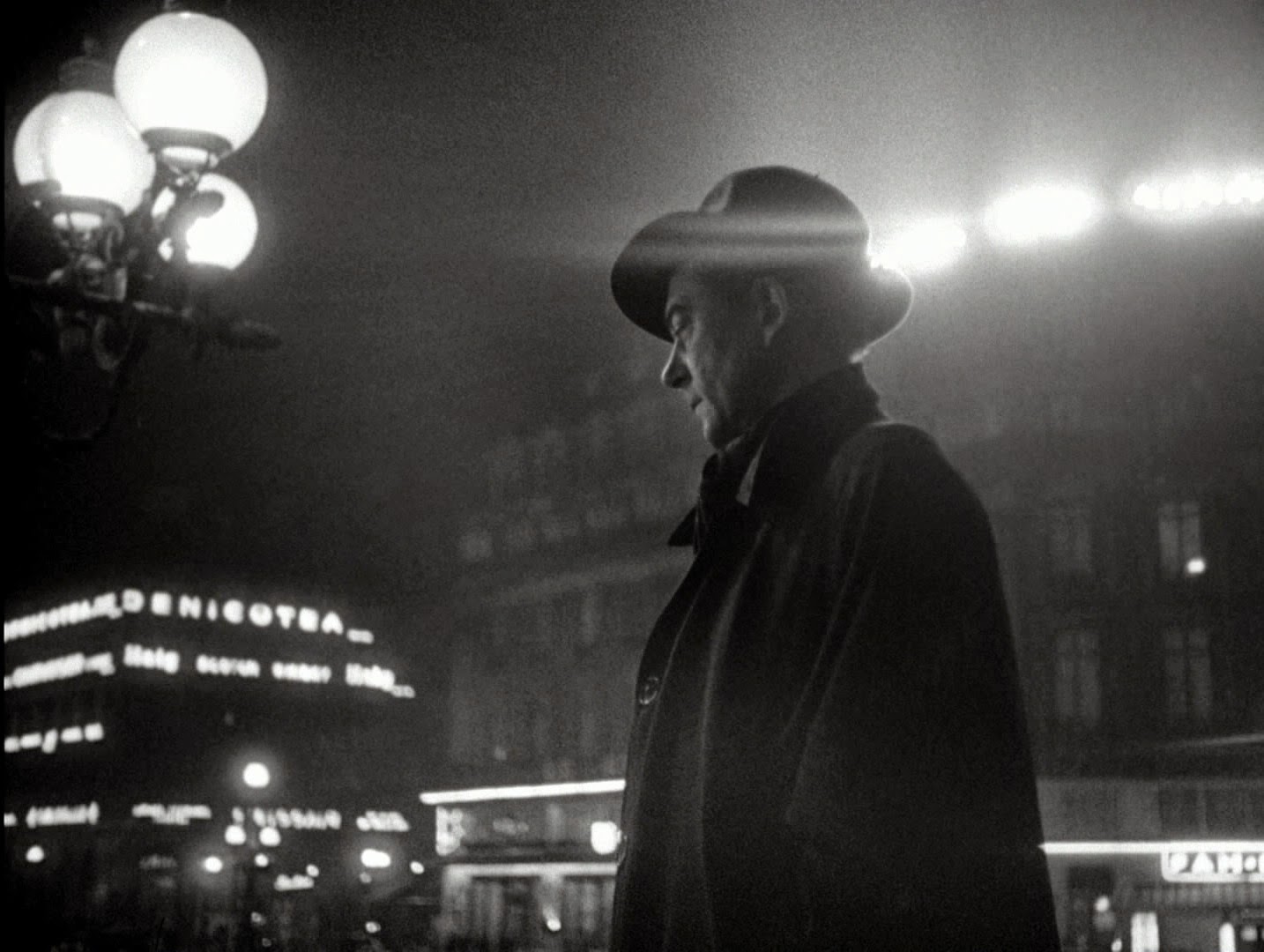
November 23: The Spiders/Die Spinnen (1919-20 -- Fritz Lang)

★★★

There’s a giddiness in Spiders that makes this film and sequal worthwhile.   Just as the erstwhile hero,  Kay Hoog, dashes from San Francisco to South America to an underground metropolitan Chinatown with little or tenuous reason, Spiders blasts forward in an orgy of décor, adventure and stunts that often lack a motive other than to pleasure the audience.  Keying on this excess is the way to enjoy the film.

As early as the first scenes of Part 1: The Golden Sea, the viewer knows how the rest of the series will work.  There’s a close-up of a scruffy, tattered sailor hurriedly putting a message in an ornate bottle.  Soon, we cut to a native American dressed as though from a Mayan stele.  The Indian spears the sailor just he throws the bottle into the sea, and the story is begun.

And Spiders gets more elaborate from there.  The sets in San Francisco are stuffed with orientalia: Chinese screens, Persian tapestries, Buddha statues, ornate doorways, Chinese robes and hats, large urns, Moroccan décor.  In the action itself, Kay and the Spiders vie to find a gold treasure hidden under a lost lake that human eyes have never seen and that is in the country of a lost Incan tribe that lives among Mayan ruins.  The Inca sport grand, feathered headdresses and plan human sacrifices to their gods.  Meanwhile, the Spiders are led by a foxy lady in jodhpurs and a Teddy Roosevelt tie, Lio Sha.  

And a lot of the action is as outrageous as the visuals.  At one point, somewhere in South America, Kay spies Lio with some of the gangsters recruiting local cowboys for their expedition to beat Kay at finding the treasure.  Seeing this horde in the saloon, Kay goes in, has a drink, starts a fight and is soon in a standoff with the whole gang.  In realistic terms, it’s hard to see why Kay would've gone in, but in cinematic terms, Kay’s action sets up a great fight scene followed by a cowboy-on-horseback pursuit across the countryside so he can leap into the basket of a hot air balloon that is just taking off.

Part 2: The Diamond Ship is no less over-the-top.  A police raid on an illegal diamond auction leads to the search for a Buddha diamond that will liberate all of Asia, and that search takes Kay and the Spiders first to England and then to the Falkands in search of a pirate treasure there.  The Spiders hypnotize a yogi to get him to divine the location of the jewel, but a crater that spews poisonous gas at night complicates the salvage of the treasure.  There are even Indian spies in turbans in this episode.  Like The Golden Sea, The Diamond Ship is beside itself with outrageousness.

It’s hard not to think of Louis Feuillade’s Les vampires while watching Spiders.  Kay Hoog’s struggle with the Spiders certainly calls to mind Philipe Guérande’s with the Vampires, and character of Spider leader Lio Sha resembles that of Irma Vep.  Robbers wear tight black outfits in both, and there are WW I worries in both.  But the comparison pretty much ends there.  At this point in his career, Lang’s direction is't nearly as controlled or fluid as Feuillade’s, and the stasis that characterizes Spiders despite its excess would make it hard to enjoy 6-1/2 hours of it.

But in Spiders, we can already see some of the techniques and images that will recur in  Lang's work later.  Close-ups abound here, starting with the very first shot, and there is also intercutting to maintain two story lines and, occasionally, create suspense.  We watch the action of cowboys chasing Kay alternate with his acquaintance trying to decide whether to take off in the balloon; later, we switch between Lio being prepared for sacrifice and the troop of cowboys looking for her.  Another typical Langian technique here is use of depth of field.  For instance, the background space is important as Kay stands beside the window of the cantina and we see Lio conspiring in the background; in a later example, we watch Kay as he passes some caged tigers in the background menacing him.  There is also some of Lang's love for flashback in Spiders.  A clear example starts Part 2 as the story flashes back to Kay's discovery of his wife's body and the plastic spider the gang has left as its calling card.

Some of the imagery of Spiders also prefigures that in other Lang films.  The underground Chinese city here calls strongly to mind the underground city of Metropolis, and the menace of water is also strong in both films.  Spider’s cowboys are threatened with drowning when they steal the treasure, just as the workers’ children are in Metropolis.  And caves and catacombs occur in a lot of early Lang.

Spiders is a particular kind of cinematic fun.  Many of the Lang's images have descendents in more recent films.  Kay's adventurous dashing around establishes him as a forebear of Indiana Jones, and the scene with Kay risking death in a compacting shaft has many future echoes, including a very similar scene in Star Wars.  And from an auteur perspective, it’s interesting to pick out elements here that Lang will develop more in the future.  But the strongest pleasure here is the sheer delirium of story and image that rushes onto the screen here.  There’s fun to be had in sitting back and waiting for whatever outrageousness happens next in this film.

Sunday, November 9, 2014

November 9: Interstellar (2014 -- Christopher Nolan)

★★

What a disappointment this latest Christopher Nolan film is.  The film creaks with movie clichés and unconcealed pandering to the audience.  From a struggling farm family to several heroic rescues and an evil betrayal, Interstellar tugs at our heartstrings a little too firmly.  The ending could have come out of a 40s melodrama.

Unfortunately, the dialog isn’t much better.  It’s rare that the language of a film takes me out of the movie and brings home to me that that I'm watching actors reading lines, but in Interstellar, that’s exactly what happened.  The stilted language that Matthew McConaughey, Anne Hathaway, Jessica Chastain, Mackenzie Foy, Ellen Burstyn, and Michael Caine have to speak feels more like that of a sophomore physics lab report than a conversation.  And while the script mostly avoids the narrative gimmicks that Nolan can employ (though there’s an echo of Inception when we learn that an hour near the black hole is seven years in earth time), the sprawl of the The Dark Knight Rises is much in evidence here.  But while it’s hard to stay engaged in this film for its nearly three-hour run time, at least the score by Hans Zimmer cues us in on how you should respond to a character or event when we're uncertain.

Interstellar has wonderful production values and a lot of good acting that remains firm in the face of some terrible writing.  And it’s pleasant to watch the echoes of other sci fi touchstones like 2001 and its reflections on helmet faceplates.  But there’s nothing much at the core of all this technique in Interstellar, which makes the movie's thee-hour length seem like 21 earth years.

Thursday, September 11, 2014

September 11: Edge of Tomorrow (2014 -- Doug Liman)

★★★

This is a fun summer movie.  We have sci-fi action Tom Cruise again, but this year it’s fun watching him play against type.  Rather than the in-control hero we’re used to, he starts as a man of little courage who grows into the role of hero through a series of time reboots that give him the opportunity to hone his combat skills.  He repeatedly goes into battle against the alien Mimics, gets killed, and restarts the day in J-Squad on the morning of the invasion he is to fight in.  In addition to building his fighting skills, he picks up a love interest, Rose Vrataski, who has previously had the time reboot power, and Dr. Carter, a scientist who is trying to figure out what is happening. 

Edge of Tomorrow is a fun action thriller though most of its run.  The repeated scenes of the human counter attack on the beach echo the Normandy opening of Saving Private Ryan, except here we get lots of laser beams, slashing robotic tentacles and ugly, nimble aliens all jammed into the battle.  And Doug Liman takes the film beyond the beach landing on a romp to Paris to discover the Omega alien hidden away in the basement of the Louvre.  It's all fun.

Another point of interest here is watching the same series of events repeated with each reboot.  We experience most of the detail of first day as we run follow Major Cage's activities, but Liman then removes and tweeks details with each retelling to get Major Cage further into the action.  There’re more than a little fun in watching the witty interplay between the action of the current iteration of events and our experience of the first and other versions.  This technique is a clever and engaging use of the time travel trope.

Which is not to say that Edge of Tomorrow is without problems.  The most limiting element of the film is that the rules of its universe are so complicated that we’re left with lots of exposition and can still be confused about how or why something is happening.  To feel that the ending of the film isn’t a cheat, for example, it’s important to know that the killing of an Alpha would reset time and that Cage couldn’t come back to try to kill the Omega if that happened.  This isn’t an intuitive element of the film, and it's the kind of detail that the audience has to pick up on among all the SFX.  The main drawback to the film is that Edge of Tomorrow has a complicated set of alternative-universe rules that are as central to the action as they are byzantine.


But for those of us wanting a sci-fi action thrill with lots of special effects and a dribble of a love story, Edge of Tomorrow is perfect.  And for the true sci fi aficionados, the film has also offers a layer of concept.

Wednesday, September 10, 2014

September 10: Rififi/ Du rififi chez les hommes (1955 -- Jules Dassin)

★★★★★

Rififi is a great heist procedural that sets the standard for suspense in showing a complicated theft.  It’s one of the first films in which we watch the gang collect their information and tools with such studied precision.  From a hotel window, Jo watches the neighborhood’s regular comings and goings, and we watch Jo through a downward tilted camera that puts him in the foreground and lets us see what’s outside the window in the background.  We get the whole scene.  The team methodically gets key castings, times car trips, cases the safe and tests the alarm system.  But the crown jewel is the heist itself, a 28-minute study in how silence can make good cinema.  Quiet beyond the moment they don’t need be, the quartet of robbers tip toe around the closed jewelry store, flinching at every sudden noise and hitting our nerves with theirs.  Jules Dassin amps the tension here beyond that of many more technically involved heist flics.

But Rififi doesn’t stop at effective suspense.  It creates an interesting character, the middle-aged Tony, and follows the challenges that he faces after he’s released from five years in jail.  Like Eddie Coyle in Peter Yates’ movie, le Stéphanois here is no longer at the top of his game.  In the first scene of Rififi, we meet him losing at a card game and unable to continue playing because he is out of money.  His old reputation doesn’t have the value of hard cash with the other players, and a persistent cough shows his health to be broken.  In addition, his girlfriend has long abandoned him, and younger criminals question whether he’s up to pulling off a job.  Dassin’s Tony, though, isn’t a man who is ready to end his career at this point.  Tony gives a severe, and unwarranted, beating to his former girlfriend, Mado, but he shortly has to reckon with his own injustice when he realizes that Mado’s still enough in love with him not to betray him.  Tony also a passion for his godson, Tonio, and his love for the boy has an important bearing on the outcome of the film.  As Rififi speeds toward its conclusion, we watch Tony draw on his past experience and connections to track down the people who have kidnapped the boy and to take his revenge on them.  In Tony, Dassin gives us an aging man who can still grow and can muster himself enough to be effective in the world, even if he can’t ultimately sustain the effort.

Another of the other attractions of Rififi is its affection for Paris.  Dassin’s camera loves the city and moves throughout it day and night.  We see the location of the heist in the Place Vendôme and watch the beginning of the robbery in a car theft at the nocturnal Place de l’Opéra. The Paris Metro figures in the film as Tony rides across the Pont de Bercy and when he follows a drug delivery that starts at the Art Nouveau Port-Royal station.  Tonio is kidnapped in the Jardin du Luxembourg, and Tony consults contacts in Montmartre to help find the boy.  And then there’s the shootout climax in the suburbs.  Rififi loves the city of Paris at all hours of the day and in all weather conditions, and Paris is an important part of the beauty of Dassin’s images.

Another important part of this beauty is Dassin’s cinematic technique.  He uses low key lighting often to create gritty visuals that are a standard element of film noir vocabulary.   Even early in the film, at the card game and, shortly later, at the café, we see rough men with their faces sharply cut by shadow.  And accompanying this lighting is a persistent use of deep focus.  During the robbery, for example, low key light adds drama while the expansive depth of field lets us watch and respond to the faces of several of the robbers at the same time.  Dassin uses deep focus for other purposes, too.   For example, when Mario and his wife Ida are killed, the deep focus maintains a same-shot, visual dialog between them as they face Grutter and Remi.  In other scenes, Dassin uses depth of field to portray action without cutting.  After a rapid series of cuts as Tony drives his godson home, Tony stops the car at the house, and the camera backs up and, too, stops.  The shot continues without a cut, though,  while from the back of the extreme depth of field, we watch the Tonio’s mother run to the car.  The deep focus lets Dassin give us all this information in one shot so he can rhythmically reinforce the action.

One of the most effective of Dassin’s techniques is the way Rififi slowly moves from the stark, steady realism of the card game and the robbery to increasingly macabre visuals.   Once the robbery has been completed and Grutter has started to try to grab the jewels, we encounter an odd tracking shot that shows Grutter leading César though an unlikely forest of floorshow props.  The props separate as the two go through and close around the tracking camera, a claustrophobic shot style we have yet to encounter in the film.  And we get a similar image when Tony later finds César there.  The claustrophobia and odd props add to the sense that the characters are leaving the bounds of the normal and moving into another sphere.  In another unusual image shortly after, Dassin places Tonio’s large, inflatable clown squarely in the center of the screen as the London fence brings his cash for the jewels.  In fact, the fence even comments on the big, ghoulish toy and playfully punches it, giving the whole scene an unusual, menacing, surreal air.

Rififi continues into increasingly macabre imagery.  When Tony shoots the drug-addled Remi, water is running into a small sink above the body, and Dassin’s camera lingers on the sink as it fills and then overflows onto the floor, a visual representation of how what's typical and to be expected have been usurped.  Shortly after, we experience the strangest imagery in the film.  As the wounded Tony tries to drive his godson home in a convertible, we see upward images of the child standing in the car seat dressed as a cowboy and waving his gun around.  Cold, he puts on his godfather’s over-sized coat, and we watch shots of the car moving quickly along the road with bare tree branches reflected on the windshield intercut with shots of the road and shots of the sky.  It’s a disturbing sequence of short, discordant images that captures Tony’s desperation as he tries to get the boy home.

Rififi is a dark, skillful blend of many compelling elements of film noir that goes beyond the genre to create a memorable film.  Blacklisted in the US and working with a small budget, Jules Dassin creates an important crime film with more creativity than resources here.  It's an effective cinema experience.